
Cupping that's part of a treatment plan, not a spa menu
At Physica Medica, cupping is a clinical tool I use to decompress soft tissue, increase local circulation, and release fascial restrictions that hands-on pressure alone can't reach. Every session is one-on-one with me, Dr. Birikov, from start to finish.
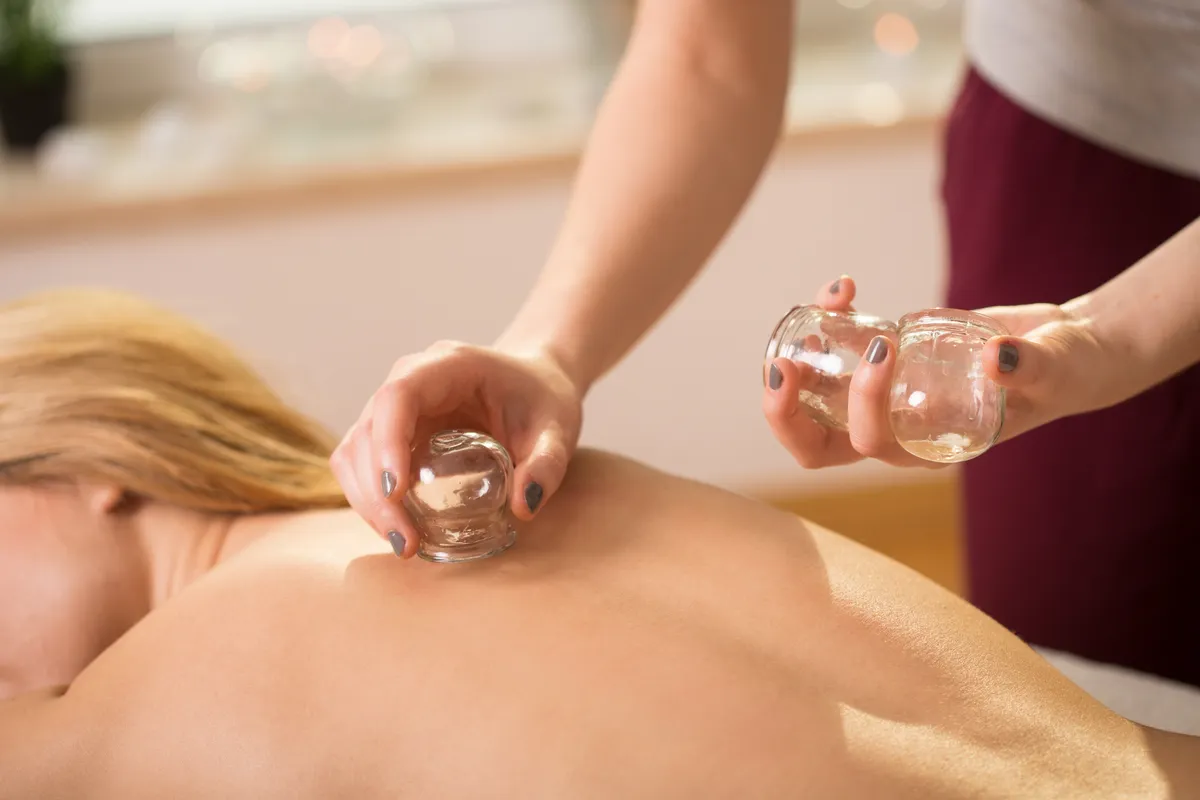
Myofascial Cupping at Physica Medica — Clinical, Not Cosmetic
You've probably seen cupping on athletes at the Olympics or on spa menus between facials. What I do is neither of those things. Myofascial cupping is a specific technique applied to soft tissue and fascia as part of a structured physical therapy session. The goal is always the same: find what's restricting movement or driving pain, and fix it.
I integrate cupping into your treatment plan when it's the right tool for what I'm finding in your tissue. It doesn't replace hands-on work or movement correction. It works alongside them. And it's performed by me, not a rotating technician following a script.
If you've had cupping at a spa and felt like it didn't do much, that's worth understanding. A standalone cupping session without assessment, without movement correction, and without continuity between visits is a different thing entirely.
How Myofascial Cupping Works on Fascia and Soft Tissue
The cups create negative pressure against the skin and underlying tissue. That suction lifts the fascia instead of compressing it, which is the opposite of what massage does. For tissue that's been compressed, overloaded, or stuck in chronic tension, that decompression changes the mechanical environment in a way that compression-based techniques can't replicate.
Increased blood flow follows. Restricted layers of fascia begin to separate. The nervous system response in the area shifts. None of this involves pulling toxins out of your body — that framing is not accurate, and I won't pretend otherwise. What cupping does is mechanical and circulatory. That's enough to make it genuinely useful for the right problems.
What Cupping Can and Cannot Do — Honest Answers
Cupping is one tool. The plan is what drives results.
Assessment first
Before I apply a single cup, I assess how you're moving and where the tissue restriction is actually coming from. Cupping placed in the wrong location based on where pain is felt, rather than where the problem originates, produces limited results.
Targeted application
I apply cups to the specific soft tissue and fascial areas identified in assessment. Static or dynamic cupping depends on what the tissue needs. The session is adjusted based on how your body responds, not a preset protocol.
Integrated treatment
Cupping is followed by manual work, movement correction, or dry needling depending on what your treatment plan calls for that day. The decompression cupping creates is often the preparation that makes other techniques more effective.
Plan continuity
Because I see you every session, I know exactly how your tissue responded last time. That continuity is what separates a treatment plan from a series of disconnected appointments.
What Cupping Can and Cannot Do — Honest Answers
Cupping does not pull toxins from your body. There is no credible mechanism for that claim, and I won't repeat it to make the treatment sound more dramatic than it is. What cupping does: decompresses restricted fascia, increases local circulation, reduces tissue density in overloaded areas, and creates a neurological response that can decrease pain and muscle guarding.
- IT band syndrome — the lateral thigh and hip tissue responds well to fascial decompression when compression-based work hasn't moved the needle
- Plantar fasciitis — cupping along the plantar fascia and calf can reduce the chronic tension driving heel pain
- Upper back and neck tightness — especially where rounded shoulders and forward head posture have created chronic tissue load
What cupping cannot do: fix a structural problem on its own, replace movement correction, or produce lasting results as a one-time standalone session. If someone is selling cupping as a cure, that's the part to be skeptical about.
Conditions and Symptoms That Respond to Cupping
Cupping is most useful where tissue has become restricted, dense, or poorly perfused from chronic load, repetitive strain, or compensatory movement patterns. These are the presentations I use it for most often.
Myofascial Cupping vs. Spa Cupping
| Physica Medica | Traditional PT Clinic | |
|---|---|---|
| Who treats you | Dr. Birikov, every session | Whoever is available that day |
| Hands-on time | The full session | ~10–15 minutes, often with an aide |
| The floor | Private treatment space | Shared gym floor, 3–4 patients at once |
| Your plan | Built and adjusted for your body | Standardized protocol sheet |
| Continuity | Same doctor tracks your progress | New therapist re-reads your chart |
What the Marks Mean and What to Expect After
The circular marks cupping leaves are not bruises in the traditional sense. They result from blood being drawn into the superficial tissue by the suction. How dark the marks are reflects how much stagnation or restriction was present in that tissue area. They are not an injury. They fade within a few days to a week, depending on the individual and the intensity of the application.
You may feel sore in the treated area for 24 to 48 hours afterward, similar to post-treatment soreness after deep tissue work. Most people find it doesn't interfere with daily activity. If you have an event, a meeting, or a reason you can't have visible marks on your skin, tell me before the session and we'll plan accordingly.
What one-on-one care feels like
A selection from 300+ verified five-star reviews on Google.
[Real patient testimonial will be placed here — verified Google review snippet.]
[Real patient testimonial will be placed here — verified Google review snippet.]
[Real patient testimonial will be placed here — verified Google review snippet.]
Rated 5.0 stars across 300+ reviews on Google.
Questions I hear before the first session
Yes, with an important qualifier. Myofascial cupping works for fascial release when it's applied to the right tissue, based on actual assessment, and integrated into a broader treatment plan. A cup placed over a sore spot without understanding why the tissue is restricted is not the same thing. The research supports cupping for soft tissue and pain modulation. It does not support the idea that it detoxifies the body.
The marks are a normal tissue response to suction, not damage. They fade within a few days to a week. Whether they appear and how dark they are depends on the condition of the tissue being treated. I tell every patient upfront what to expect so there are no surprises after the session.
This is a cash-pay practice. I don't bill insurance. Pricing is straightforward and I discuss it on your first call so you know exactly what you're committing to before you book. No hidden fees, no surprise charges.