
Strength training that finds why you're weak before it loads you up.
If you've been told to 'just strengthen your core' and it didn't fix anything, there's a reason. Weakness is a symptom. At Physica Medica, I find the root cause first — then I build the program around what your body actually needs.
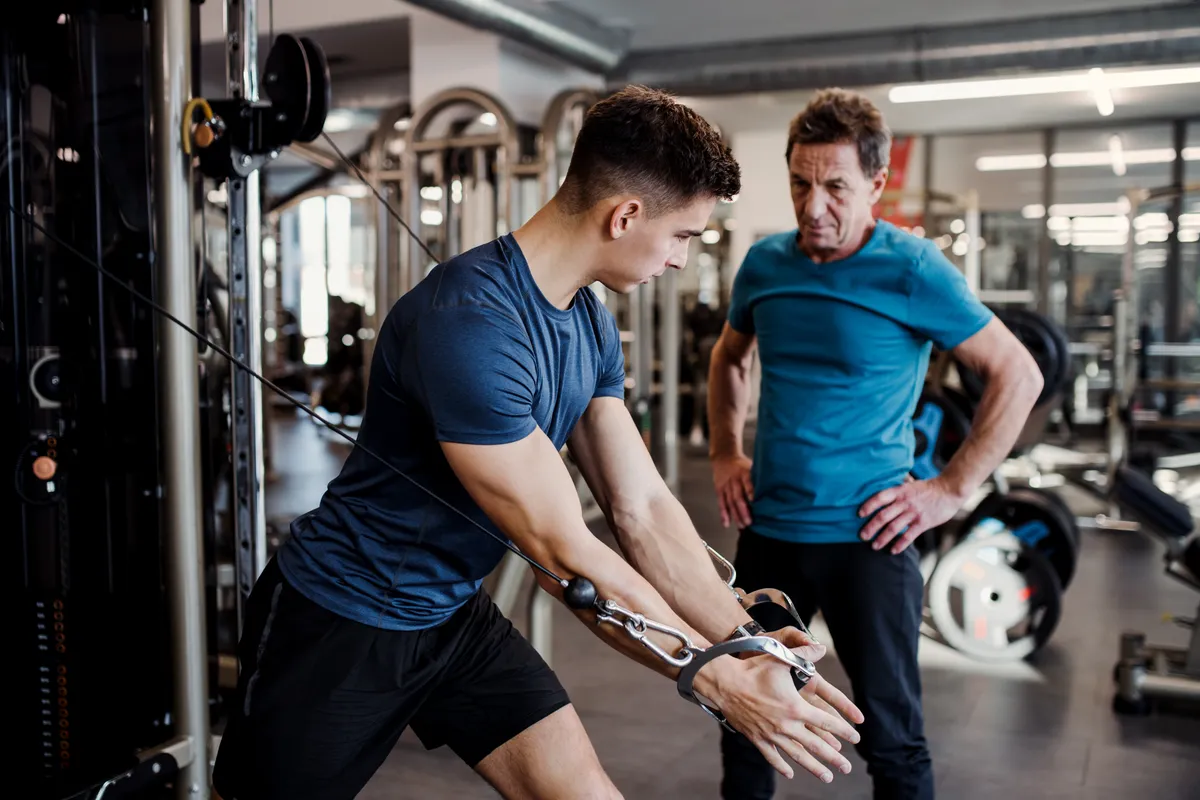
Strength Training That Starts With Why You're Weak, Not Just How to Get Stronger
A gym trainer watches you move and writes a program. That's not a criticism — it's just not clinical work. If your hip doesn't load correctly, if your shoulder blade doesn't track, if your spine compensates on every squat, loading those patterns harder doesn't fix them. It reinforces them.
I watch how you move before I prescribe a single exercise. I'm looking for where the pattern breaks down — which joint isn't doing its job, which muscle has checked out, and what the body has been compensating around. That's the root cause. That's what gets addressed first.
The exercises I give you aren't from a generic program. They're selected for your specific movement fault, your injury history, and where you are that week. Not what a protocol says someone at your stage should be doing.
What Makes Physica Medica's Approach Different From a Gym
Personal trainers are good at building fitness. I'm trained to identify why movement fails and what's driving pain or weakness underneath it. Those are different jobs. When someone comes in with chronic back pain and has been doing core work for six months with no improvement, the problem usually isn't effort. It's that no one identified what was actually weak or restricted before loading the movement.
Here, every session is one-on-one with me — Dr. Birikov — for the full hour. No aides running your exercises while I treat someone else. No shared gym floor. I assess, I treat hands-on when needed, and I prescribe movement that matches what I found. That's the structural difference between a clinical approach and a fitness product.
Who Benefits From Rehabilitation-Based Strength Training
What to Expect in a Session
Movement assessment first
I watch how you load, where you compensate, and what your body is working around. This happens at the start of every session — not just the first one. You change week to week, and the program should reflect that.
Hands-on work when it's needed
If restricted tissue, a tight joint, or a muscle that won't fire is limiting the movement, I address it directly. That might mean manual therapy, dry needling, or instrument-assisted soft tissue work before we get to exercise. Strength training on top of a restriction doesn't hold.
Exercise that matches what I found
The exercises you do in session are specific to your movement pattern, not a standard protocol. I'm watching you do them, correcting in real time, and adjusting load or range based on how your body responds.
A plan that updates every visit
Before you leave, I adjust your home program based on what I found that day. Because I see you every session, I know what changed. Nothing falls through the cracks between visits.
Who Benefits From Rehabilitation-Based Strength Training
This approach works best for patients who have a specific problem — not people looking for general fitness. If any of these sound familiar, this is likely the right fit:
- You've been told your pain is from weakness, but strengthening hasn't made it better
- You're recovering from a surgery — ACL, rotator cuff, spine — and need to rebuild correctly, not just rebuild
- You're an athlete returning from injury and need to know the movement pattern is actually fixed before you go back to full load
Chronic back pain, herniated disc, sciatica, rotator cuff tears, post-surgical rehab, IT band syndrome — these are the conditions where loading the wrong pattern has often made things worse before a patient finds their way here. The one-on-one model means I catch that and correct it before it becomes a setback.
Conditions We Address Through Strength Work
Strength training is part of how I treat most conditions at Physica Medica — not a separate service. It's integrated into the same one-on-one clinical model I use across all my work.
Rehabilitation-Based Strength Training vs. a Gym or Standard PT
| Physica Medica | Traditional PT Clinic | |
|---|---|---|
| Who treats you | Dr. Birikov, every session | Whoever is available that day |
| Hands-on time | The full session | ~10–15 minutes, often with an aide |
| The floor | Private treatment space | Shared gym floor, 3–4 patients at once |
| Your plan | Built and adjusted for your body | Standardized protocol sheet |
| Continuity | Same doctor tracks your progress | New therapist re-reads your chart |
About the cost — upfront, no surprises
Physica Medica is a cash-pay practice. I don't bill insurance, because insurance reimbursement structures dictate session length, who delivers care, and how many visits you get — none of which should be determined by a payer. Pricing is discussed directly on your first call. I'd rather you know the number before you book than find out after.
Patients who do well here are the ones who are serious about fixing the root cause, not just managing symptoms until the next flare. If you're comparing this to a $30 copay at a clinic where you'll see an aide, that's a fair comparison to make — just make it with accurate information. See payment and insurance details.
What one-on-one care feels like
A selection from 300+ verified five-star reviews on Google.
[Real patient testimonial will be placed here — verified Google review snippet.]
[Real patient testimonial will be placed here — verified Google review snippet.]
[Real patient testimonial will be placed here — verified Google review snippet.]
Rated 5.0 stars across 300+ reviews on Google.
Frequently Asked Questions
Is strength training at a PT clinic different from working with a personal trainer at a gym?
Yes — the job is different. A personal trainer builds fitness. I'm identifying why a movement pattern is failing, what's weak or restricted underneath it, and correcting that before loading it. If you've been training consistently and still have pain or keep getting reinjured, the issue usually isn't effort. It's that the root cause hasn't been found. That's clinical work, not fitness programming.
Can strength training help with chronic back pain or injury recovery?
It can — but only when the right muscles are being trained in the right pattern. Most patients with chronic back pain who haven't responded to exercise were given a generic program without a proper movement assessment first. When I identify what's actually not working and build the program around that, the results are different. This applies to post-surgical recovery too: rebuilding strength after an ACL repair or rotator cuff surgery has to account for what the injury changed, not just what a standard protocol prescribes.
How many sessions do I need before I see results?
That depends on what's driving the problem and how long it's been there. I won't give you a number before I've assessed you — that would be a guess. What I can tell you is that patients who are consistent and doing the right work between sessions typically see meaningful change within the first few visits. Pricing is discussed directly on your first call so there are no surprises.